

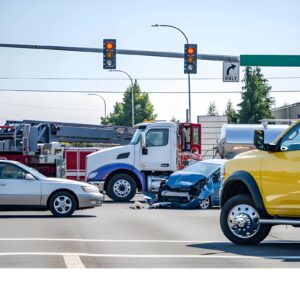
Intersections are among the most common locations for motor vehicle accidents. In Boynton Beach and throughout South Florida, these areas present a combination of traffic flow, signals, and driver decision-making that can increase the likelihood of collisions. Determining fault in an intersection accident is rarely based on a single factor. Instead, it requires a careful evaluation of evidence, roadway conditions, and the actions of each driver involved.
Understanding how fault is assessed can provide clarity for individuals involved in these incidents.
Traffic signals, stop signs, and yield signs are often the starting point in evaluating fault. These devices establish right-of-way and provide clear instructions for drivers.
In many cases, fault may be assigned based on whether a driver:
However, even when a violation appears straightforward, additional factors may still be considered.
Right-of-way rules govern how vehicles move through intersections. Drivers who have the right-of-way are generally entitled to proceed, while others must wait or yield.
Common right-of-way scenarios include:
Failure to follow these rules can be a key factor in determining liability. However, having the right-of-way does not eliminate the responsibility to operate a vehicle safely.
Driver actions leading up to the accident are closely examined. Even when traffic controls are in place, behavior such as speeding or distracted driving can influence fault.
Relevant considerations may include:
A driver who technically had the right-of-way may still share fault if their actions contributed to the collision.
Visibility plays an important role in intersection accidents. Obstructions, poor lighting, or weather conditions can limit a driver’s ability to see approaching traffic.
Factors that may be evaluated include:
These elements can affect how fault is assigned, particularly if they influence a driver’s ability to respond appropriately.
Establishing liability requires a review of available evidence. This may include both physical and testimonial sources.
Common types of evidence include:
Each piece of evidence contributes to a more complete understanding of how the accident occurred.
Florida follows a comparative fault system, which means that more than one party can be assigned a percentage of responsibility for an accident. Fault is not always assigned entirely to a single driver.
Under this system:
This approach reflects the complexity of many intersection accidents, where multiple factors are involved.
Evidence at an intersection can change quickly. Traffic patterns resume, conditions shift, and physical evidence may become less clear over time.
Prompt evaluation allows for:
Acting early can be an important factor in building a strong case.
Do you prioritize safety when driving through an intersection? Is there room for improvement? What steps can you take to be a safer driver at intersections?
Aronberg & Aronberg provides experienced legal representation for individuals involved in intersection accidents in Boynton Beach and throughout South Florida. If you have been injured in a collision, contact Aronberg & Aronberg to discuss your case and understand how fault may be evaluated in your situation.