

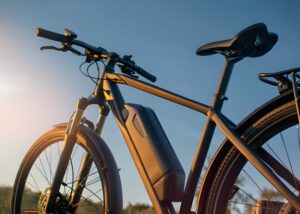
Electric bicycles, commonly known as e-bikes, have become increasingly popular across Florida as alternatives for commuting, recreation, and short trips around town. In Boynton Beach and throughout Palm Beach County, many residents enjoy the ease and convenience of e-bike mobility. Under current Florida law, most e-bike riders are not required to hold a driver’s license, register their vehicle, or carry insurance, as e-bikes are generally classified similarly to traditional bicycles. Riders of Class 1 and Class 2 e-bikes may operate without a license, and no statewide registration requirement currently exists.
However, legislative changes under consideration during the 2026 legislative session may alter these rules, especially for higher-powered e-bikes and how they are treated under traffic laws.
Under existing state statutes, Florida treats traditional electric bicycles as bicycles under traffic law, so no driver’s license or learner’s permit is required to operate them. This applies to e-bikes that meet the statutory definition, which generally includes pedal-assist bikes that do not exceed specified power and speed thresholds.
This means that in Boynton Beach today, an adult can ride most e-bikes freely on roads where bicycles are allowed, subject to standard bicycle rules. The law also requires that e-bike motors disengage when the rider stops pedaling or applies the brakes.
During the 2026 session, lawmakers have advanced bills that would modify how electric bicycles are classified and regulated. Senate Bill 382 and its companion House Bill 243 would introduce several new requirements affecting e-bike operators if they are enacted into law.
One of the most notable proposals under discussion is a new licensing requirement for certain types of e-bikes. Specifically, riders of Class 3 e-bikes — electric bicycles that provide pedal assistance up to 28 miles per hour — could be required to possess a valid driver’s license or learner’s permit to operate these higher-speed models on public roads and paths.
At present, Class 3 e-bikes are treated similarly to other bicycles and do not require licensing. However, under SB 382 and HB 243, lawmakers are examining ways to differentiate faster e-bikes from standard ones, partly due to safety concerns and crash data. If passed, this change would take effect only after the legislation becomes law and an effective date is established, which could be as late as mid-2027.
In addition to possible licensing changes for Class 3 e-bikes, the proposed legislation includes several other measures intended to clarify expectations for e-bike riders:
These measures reflect an ongoing effort by the Florida legislature to balance e-bike accessibility with pedestrian safety considerations.
As of today, standard e-bikes do not require a license to operate in Florida, and riders can enjoy many of the same rights as traditional bicyclists. However, the legislative proposals currently under consideration highlight a shift in how higher-speed models may be regulated in the future.
If you ride an e-bike in Boynton Beach or plan to purchase one, it is important to stay informed about these potential changes. Riders who use faster, Class 3 e-bikes may eventually be subject to driver’s license requirements, and all riders may need to adhere to new rules around speed and yielding to pedestrians.
Because these proposals are still under legislative review, it is not yet certain which provisions will become law. The bills must pass both chambers of the Florida Legislature and be signed by the governor before any new requirements take effect. Once any changes are enacted, they typically include effective dates that give riders time to comply.
In the meantime, e-bike riders in Boynton Beach can stay safe by following existing bicycle laws, using appropriate protective gear, and practicing courteous behavior around pedestrians and other road users.
Understanding how Florida’s laws are evolving can help you ride confidently and responsibly while enjoying the mobility that e-bikes offer.