

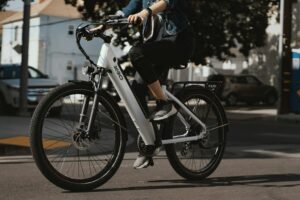
Electric bicycles, commonly known as e-bikes, have become increasingly popular across Florida. They offer convenience, accessibility, and an alternative to traditional transportation. At the same time, their growing presence on roads, bike lanes, and shared pathways has raised important legal and safety questions. Understanding how e-bikes are defined under Florida law, how speed limits apply, and what responsibilities riders have is essential for reducing risk and protecting legal rights.
Florida law classifies e-bikes as bicycles equipped with an electric motor that assists propulsion. These bicycles are divided into three classes based on how the motor provides assistance and the maximum assisted speed.
Class 1 e-bikes provide assistance only while the rider is pedaling and stop assisting at 20 miles per hour. Class 2 e-bikes may provide assistance through a throttle, even without pedaling, but also stop assisting at 20 miles per hour. Class 3 e-bikes provide assistance only while pedaling and may assist up to 28 miles per hour.
These classifications matter because they determine where e-bikes may be operated and what rules apply.
In most cases, Class 1 and Class 2 e-bikes are allowed wherever traditional bicycles are permitted, including bike lanes and shared use paths. Class 3 e-bikes are generally restricted from shared use paths unless local regulations allow their use.
Riders should be aware that cities and counties may adopt additional rules governing e-bike access. Local ordinances can affect where certain classes of e-bikes may be used, especially in pedestrian heavy areas.
Although e-bikes have maximum assisted speeds, riders are still subject to posted speed limits and reasonable operation standards. Exceeding safe speeds, even if technically within a bike’s assisted capability, can increase the likelihood of serious injury and affect liability if an accident occurs.
In legal claims, speed is often examined when determining fault. Riding at an unsafe speed for conditions, traffic, or location may be used to argue comparative negligence.
Under Florida law, e-bike riders generally have the same rights and duties as bicycle riders. This includes obeying traffic signals, yielding when required, using appropriate lighting at night, and signaling turns when applicable.
Failure to follow traffic laws can have consequences beyond citations. In the event of a collision, violations may be used as evidence when determining liability.
Riders should also understand that operating an e-bike does not exempt them from responsibility simply because a motor is involved. Courts may examine rider behavior closely due to the higher speeds e-bikes can achieve.
Florida law requires helmets for riders under a certain age, but helmet use is strongly recommended for all e-bike riders regardless of age. Head injuries are among the most common and severe injuries in e-bike accidents.
While not wearing a helmet does not automatically bar recovery in an injury claim, it may be raised as a comparative negligence argument depending on the circumstances.
Safe e-bike operation begins with understanding the bike’s capabilities. Riders should familiarize themselves with braking distance, acceleration, and handling at higher speeds.
Visibility is critical. Wearing reflective clothing, using lights even during daytime riding, and maintaining predictable movement help reduce the risk of collisions with motor vehicles.
Riders should also be cautious at intersections, where many e-bike accidents occur. Making eye contact with drivers and assuming that drivers may misjudge speed can help prevent crashes.
E-bike accidents often involve complex liability questions. Motor vehicle drivers, municipalities, manufacturers, and riders themselves may all be scrutinized following a collision. Understanding legal responsibilities before an accident occurs helps riders make safer choices and protects their rights if the worst happens.
E-bikes offer many benefits, but they also require increased awareness and responsibility. Knowing how Florida law defines e-bikes, understanding speed limits, and practicing safe riding habits can reduce risk and support safer shared roadways.
At Aronberg & Aronberg, Injury Law Firm, we represent individuals injured in e-bike accidents and other serious collisions. If you have been injured while riding an e-bike and have questions about your legal rights, seeking experienced legal guidance can help you understand your options and protect your future.